
Article content
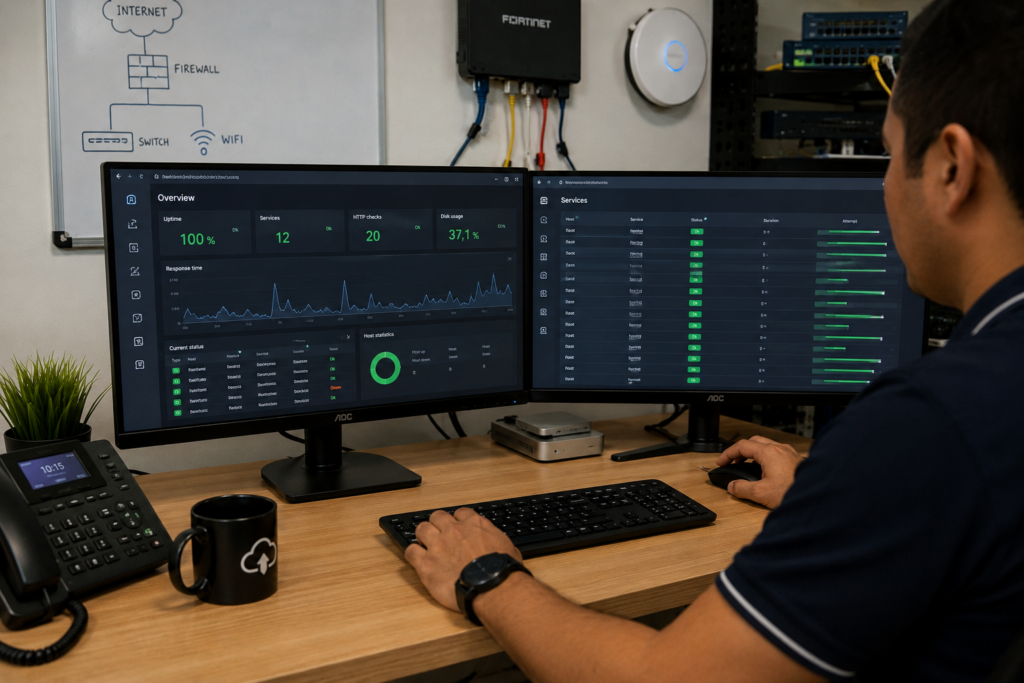
In small and mid-sized organizations, monitoring is usually something we think about after the first incident.
Everything looks fine until the internet is slow, the server is full, the backup failed, or users start reporting problems before we even know something is wrong.
The problem is not always lack of tools. Many times, the real problem is lack of visibility.
What we need to understand
Monitoring is not only for big companies.
A small clinic, hotel, school, or office also depends on internet, Wi-Fi, switches, firewalls, cloud apps, printers, phones, backups, and storage. If one of those services fails, the impact can be immediate.
We do not need to monitor everything from day one. But we need to know what is critical for the business and what signs can tell us that something is starting to fail.
What we can implement
The solution should be practical and easy to maintain.
We can start with the basics:
- Internet availability and latency.
- Firewall, router, and switch status.
- Wi-Fi access points and client experience.
- Server CPU, memory, disk, and services.
- NAS health, storage capacity, snapshots, and replication.
- Backup success or failure.
- Important application availability.
- Alerts for critical issues, not for every small event.
The goal is not to create noise. The goal is to receive useful alerts before users are affected or before a small issue becomes a bigger problem.
What we learned
The main learning is that monitoring needs context.
A dashboard full of graphs is not useful if nobody understands what action to take. We need simple checks, clear alerts, and a basic response plan.
We also learned that monitoring should grow with the business. We can begin with basic availability checks and then add more details like performance, capacity, security events, and user experience.
Final thought
Monitoring is not about having the most expensive platform. It is about knowing what is happening in the environment.
For small and mid-sized organizations, a simple monitoring strategy can reduce stress, improve support, and help us make better decisions.
The best moment to monitor is before the problem becomes visible to everyone.
Operational Support
Need Help Applying This in Your Environment?
Our team can help plan practical improvements for reliability, visibility, and connectivity operations.