
Article content
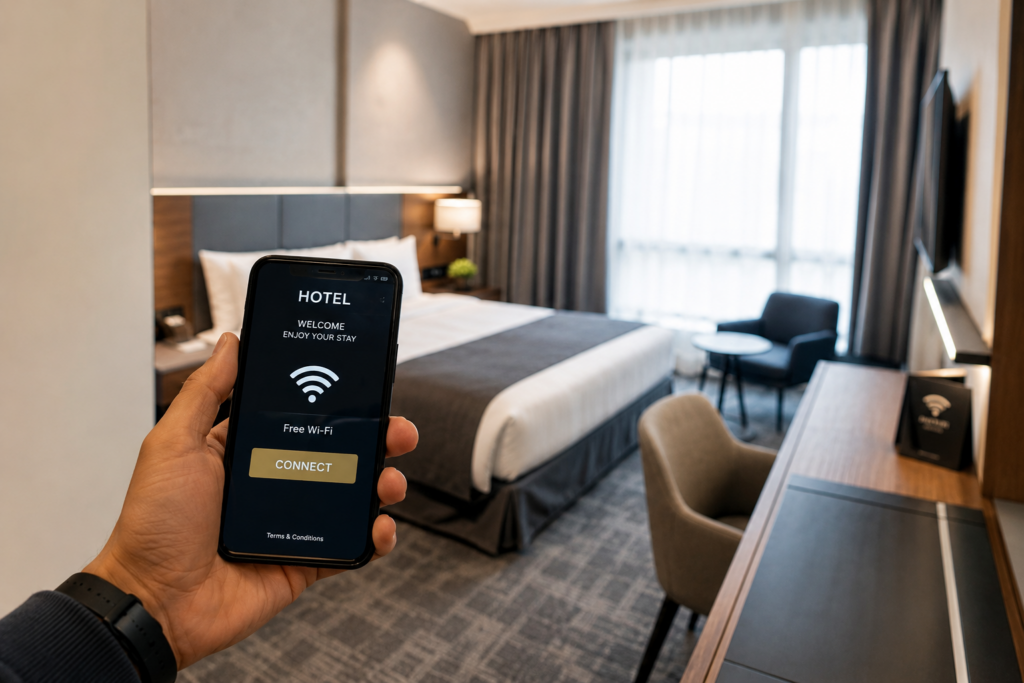
In hospitality, Wi-Fi is not only a technical service. It is part of the guest experience.
A customer may not know what roaming, RSSI, channels, or access point placement means. But they notice when the video call freezes, the room key app fails, the payment terminal is slow, or the phone disconnects while walking from the lobby to the room.
For the guest, that feels like the hotel is not delivering what was promised.
What is really happening
Many hotels and small hospitality businesses focus only on coverage. They ask, “Do we have signal in every area?” That is important, but it is not enough.
A Wi-Fi network can show full bars and still provide a bad experience if the roaming design is poor. If the device stays connected to an access point that is already too far away, the connection becomes unstable. The guest feels this as slow internet, drops, buffering, or random disconnections.
The stressful part is that users usually do not separate “bad Wi-Fi” from “bad service.” They simply feel frustrated.
What we can improve
The solution does not need to be tied to one vendor. We need to design the wireless network around how people actually move inside the place.
We can start with practical steps:
- Review AP placement, not only signal strength.
- Validate roaming between lobby, rooms, hallways, meeting rooms, and common areas.
- Avoid too much overlap between access points.
- Tune power levels and channels correctly.
- Separate guest, staff, IoT, and operational devices.
- Test with real devices, not only from the controller dashboard.
- Monitor client experience, retries, disconnections, and roaming events.
The goal is simple: the guest should move naturally without thinking about the network.
What we learned
The main learning is that Wi-Fi quality is part of customer perception.
When roaming works well, nobody talks about it. When it fails, everybody notices it. A poor wireless experience can create stress for the guest and more pressure for the hotel staff, even when the internet circuit is working fine.
We also learned that more access points do not always mean better Wi-Fi. Sometimes the problem is not lack of equipment, but lack of design.
Final thought
In hospitality, Wi-Fi should feel invisible.
Guests do not want to troubleshoot connectivity during their stay. They want to work, relax, stream, call, pay, and move around without interruptions.
That is why roaming quality matters. It directly affects how customers feel about the service they are receiving.
Operational Support
Need Help Applying This in Your Environment?
Our team can help plan practical improvements for reliability, visibility, and connectivity operations.